GST compliance feels complicated mostly because the rules are scattered. For a typical small retailer or wholesaler, the day-to-day part comes down to a handful of habits. This checklist collects them in one place.
This is general guidance to help you organise your billing, not tax advice. Rules and thresholds change and some vary by state, so confirm the details for your business with your chartered accountant.
1. Know which document you should be issuing
- Tax invoice: the standard document for a registered business making a taxable sale.
- Bill of supply: used by businesses under the composition scheme and for exempt goods. A composition dealer cannot charge GST to the customer, so the bill should not show it.
- Credit and debit notes: for returns, price corrections and discounts after the sale. Do not edit an old invoice; issue a note against it.
2. What a tax invoice should carry
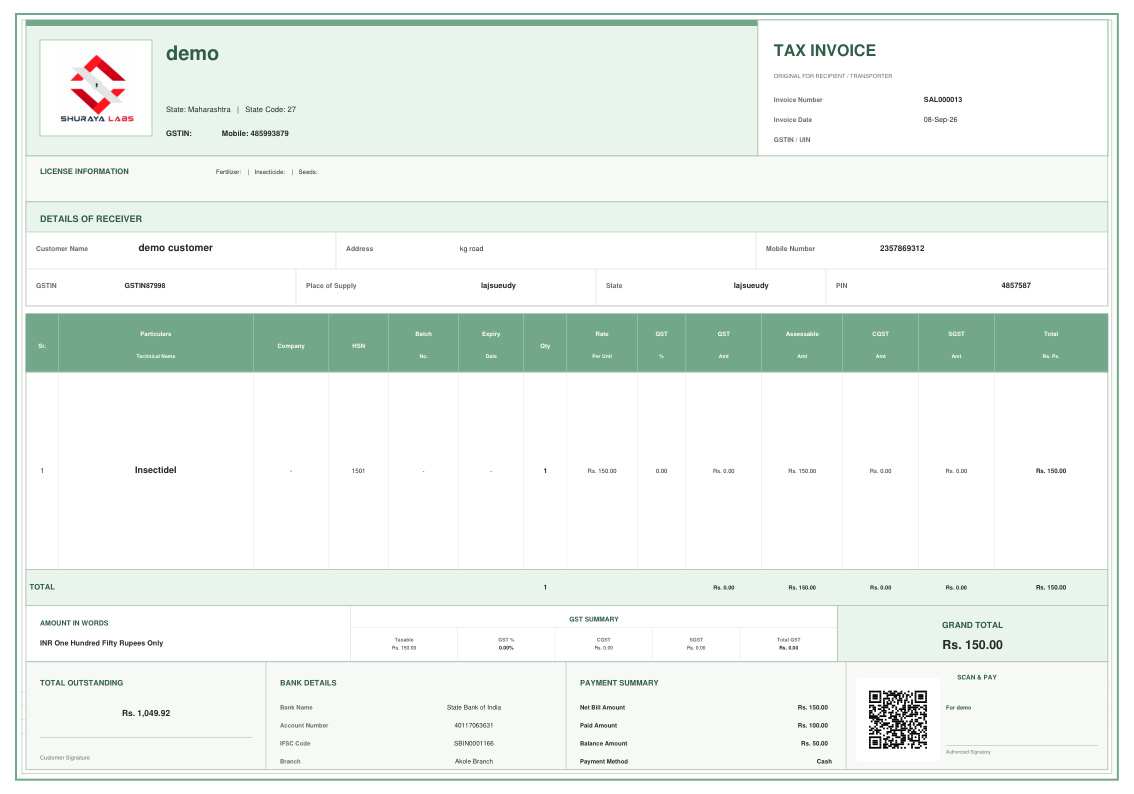
Your billing software should fill most of this automatically. Check that every invoice includes:
- Your business name, address and GSTIN
- A unique, consecutive invoice number for the financial year
- The invoice date
- The customer's name and address, and their GSTIN if they are registered
- HSN codes for goods (or SAC codes for services), with the number of digits required for your turnover
- Description, quantity and unit of each item
- Taxable value after any discount
- Tax rate and amount, split into CGST and SGST for sales within your state, or IGST for sales to another state
- Place of supply, with the state name, for inter-state sales
- Your signature or digital signature
Consecutive numbering matters more than people expect. Gaps and duplicates are among the first things an auditor notices. Software that generates numbers for you removes the problem entirely.
3. E-way bills
An e-way bill is generally required when you move goods worth more than ₹50,000 in a single consignment, whether you are selling, returning or transferring stock. Some states set different limits for movement within the state, so check yours.
Keep the e-way bill details with your sales records. Shuraya Billing has a dedicated e-way bill report, so the data is ready when you or your accountant need it.
4. E-invoicing
Businesses above the e-invoicing turnover threshold (currently ₹5 crore in aggregate annual turnover) must generate an Invoice Reference Number for B2B invoices. If you are growing towards that limit, plan the switch with your CA in advance rather than in the month you cross it.
5. Returns and reconciliation habits
- Close each day. Match the day's sales report with cash, UPI and card receipts before you go home.
- Record purchases promptly. Input tax credit depends on your supplier's invoices appearing correctly, and a missed purchase bill is lost credit.
- Review low-value errors monthly. A wrong HSN code on one product repeats on every bill until someone fixes the product master.
- Export clean reports. Sales, purchase, payment and ledger reports in a consistent format make your accountant's job, and bill, smaller.
6. Keep your records
GST law expects you to keep books and records for 72 months from the due date of the annual return for that year. Keep backups in more than one place: your computer, an external drive and, if you choose, a secure cloud folder.
How Shuraya Billing helps
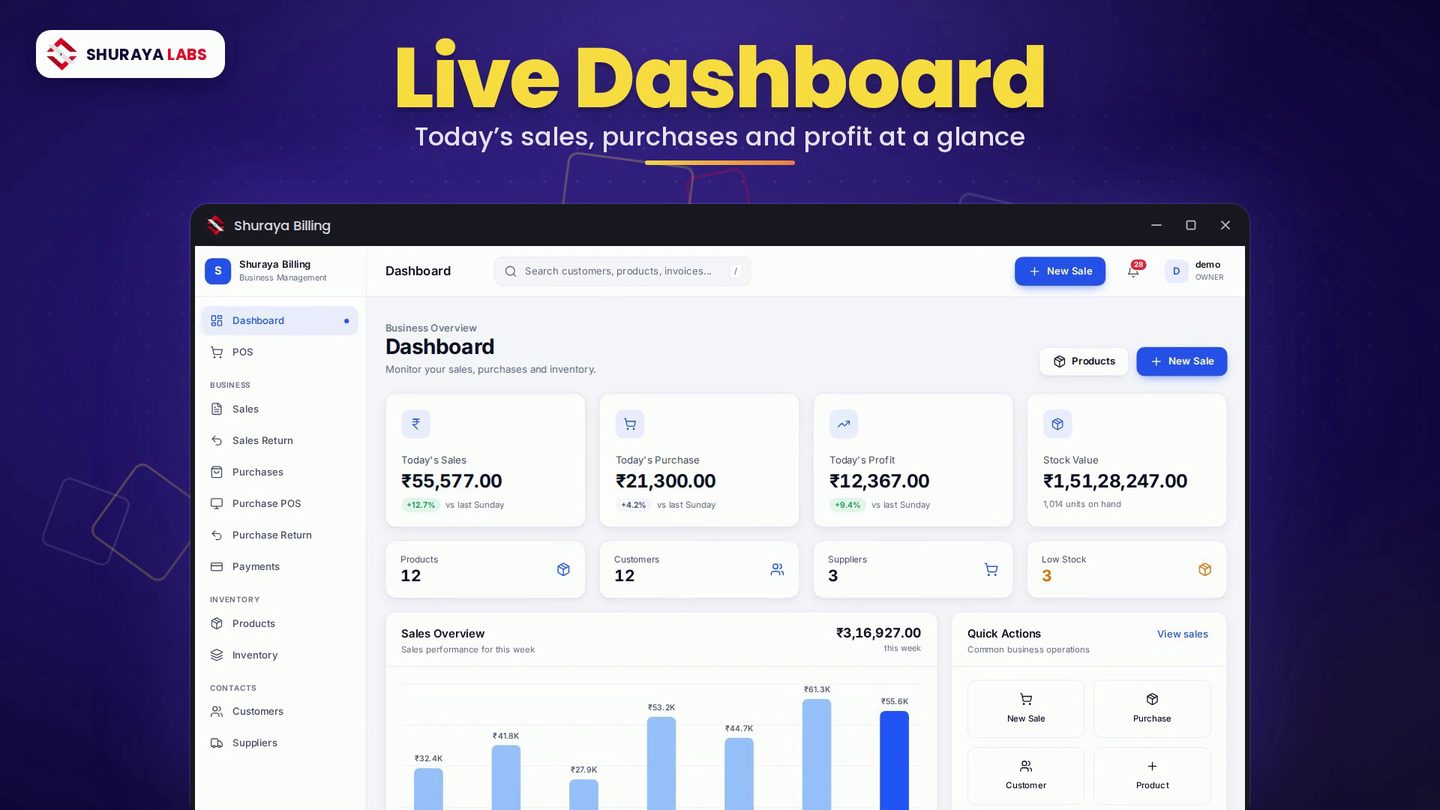
Shuraya Billing generates GST invoices with consecutive numbering, HSN details and tax breakups, supports GSTIN and state details for your business and customers, adds a payment QR to the invoice and produces sales, purchase, payment, ledger and e-way bill reports. One-click backup keeps your records safe.
It will not replace your CA. It will make every conversation with them shorter.