Credit is part of how business works in India. The contractor who buys cement every week, the family that settles the kirana bill at the end of the month, the reseller who pays after their own customers pay them. Refusing credit loses good customers. Giving it without a system loses money.
The goal is not to stop giving udhaar. It is to always know three numbers: how much is outstanding, who owes it and how reliable each customer has been.
Why notebooks stop working
The khata book has served shops for generations, and it breaks down in predictable ways:
- Entries depend on whoever was at the counter remembering to write them.
- Part payments are hard to track against the right bill.
- There is no quick way to see the total outstanding across all customers.
- A lost or damaged book can mean lost money that is hard to prove.
A simple system that works
1. Record credit at the moment of sale
Every credit sale should be a proper bill against a named customer, not a note in the margin. That way the invoice, the items and the balance are linked from the start.
2. Record payments against bills
When a customer pays part of what they owe, apply it to their account immediately. The remaining balance should update on its own.
3. Review outstanding dues weekly
Pick a quiet time each week. Look at the total still to collect, sort customers by the amount they owe and by how long it has been outstanding. The follow-up calls almost plan themselves.
4. Set limits by reliability, not by feeling
Some customers always pay on time, some always pay eventually and some need reminding every month. Base credit limits on that history. It is fairer to good customers and protects you from the rest.
How Shuraya Billing handles dues
In Shuraya Billing, credit is a normal part of billing:
- Each customer has a running balance built from their bills and payments.
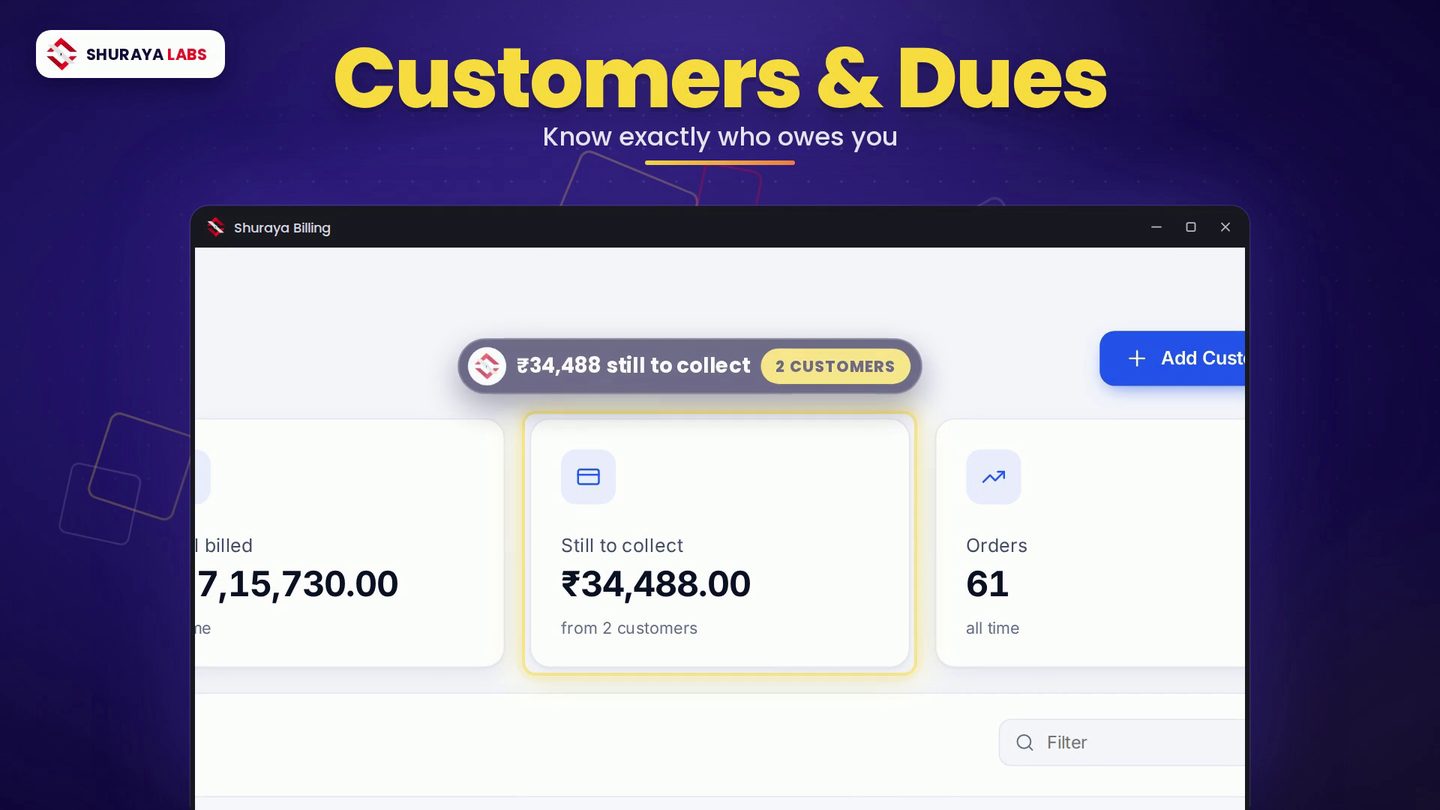
- The Customers screen shows total billed, total still to collect and the number of orders, so you see your exposure at a glance.
- Customers are ranked by credit reliability, based on how they have paid in the past.
- Customer ledgers are available as reports, ready to share when someone disputes a balance.
- Everything runs offline, so checking a balance never depends on the internet.
A few collection habits that help
- Share the ledger, not just the total. Customers dispute a number; they rarely dispute a list of their own bills.
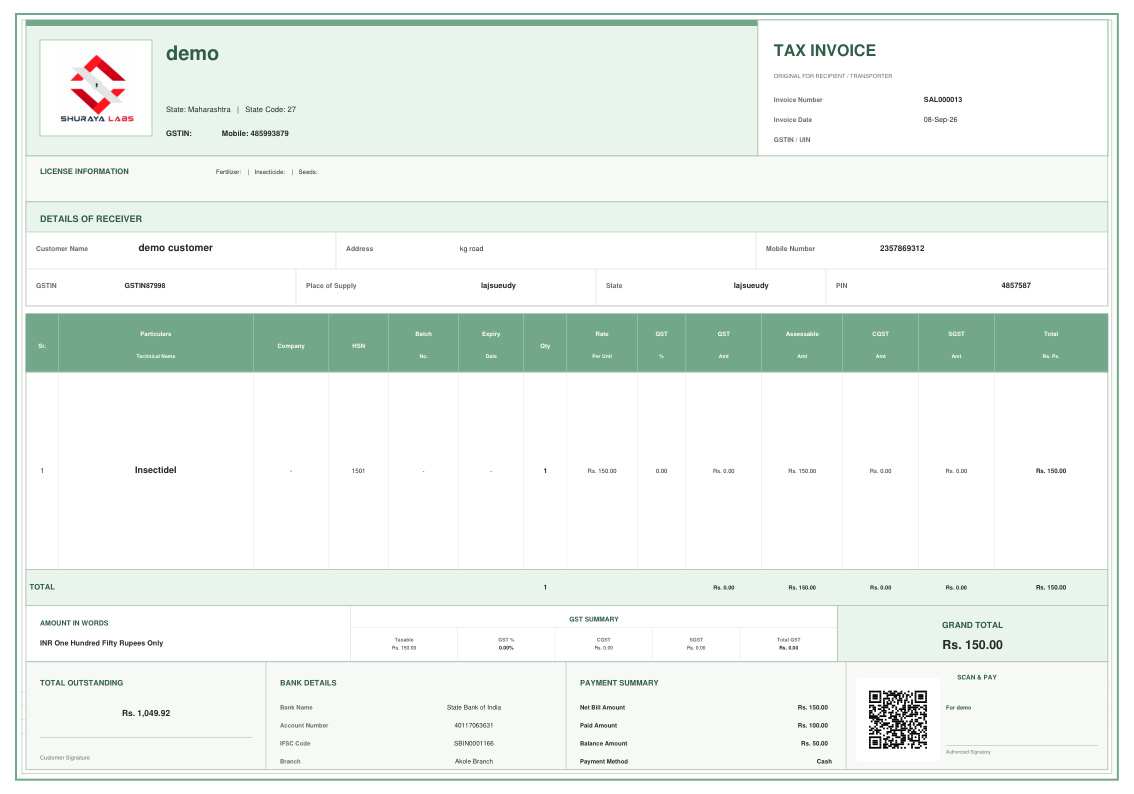
- Put the payment QR on the invoice. Removing friction from paying is the easiest way to get paid sooner.
- Ask on a fixed day. A predictable monthly reminder feels routine, not personal.
Credit should build loyalty, not anxiety. With every due recorded against a bill and a customer, you decide who gets credit and how much, based on facts. If you want to see how it looks, the product film walks through the customers and dues screens.